

-
“The Journal of Sorrow is a clinical horror novel that earns its strangeness. Luttrull builds his story in layers using session notes, treatment plans, and a journal that writes itself.”
— 5-star Amazon review, Australia“The writing in this is phenomenal and very descriptive. Suspense had me hanging on the edge.”
— 5-star Amazon review
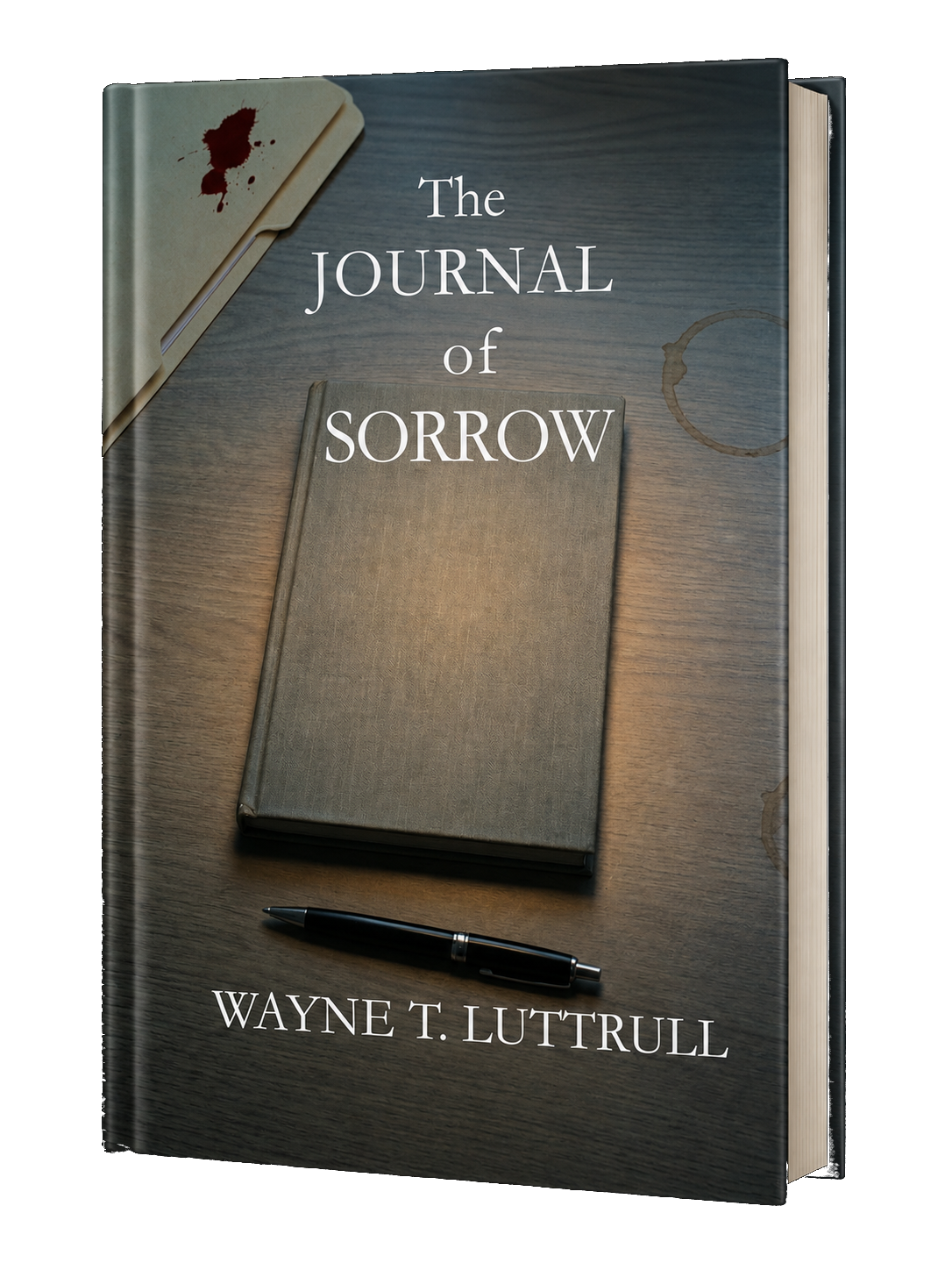
The Journal of Sorrow
Psychological horror · Coming at the end of 2026
A journal that can’t be destroyed. A doctor who can’t look away.
When Jacob Eldrin is admitted to Holy Meadows Psychiatric Institute, he has one complaint: a journal he cannot get rid of, no matter how many times he burns it, buries it, or throws it away. Dr. Travis Winston takes the case.
Session by session, Winston documents a case that refuses to resolve. His notes, audio logs, and clinical addenda become an attempt to hold onto something solid as Jacob’s account draws him in. The more he tries to explain the journal’s stories, the less certain he becomes of his own footing.
What Jacob describes could be psychotic decompensation. It could be something else. The doctor assigned to find out is no longer sure which side of that line he’s standing on.
The record doesn’t resolve. Will you?
Content note: institutional confinement, dissociation, psychosis, mental illness, and self-harm.
Join the waiting list for a free copy →
Explore the Connected Game
The Journal of Sorrow: The Lost Entries is a psychological horror game in development at Ice-Type Platypi Studios, set in the world of the novel.